What is factory wastewater treatment? In-house processing vs. outsourcing, how to choose a contractor [Basic Knowledge]
Does handing it over to a contractor end the responsibility? Does the handling change for waste acid with a pH of 2.0 or lower? This explains the rules for treating factory wastewater as industrial waste.
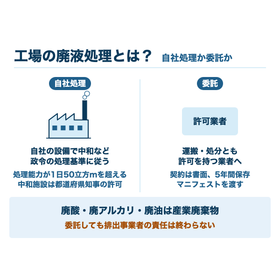
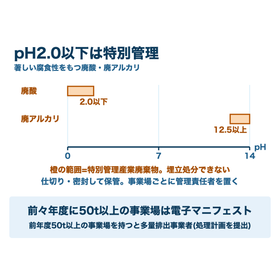
In the production process of factories, various types of waste liquids, such as used acids and alkalis, are generated. There are two methods for treating waste liquids: processing them with in-house equipment or outsourcing to a licensed contractor. Regardless of the choice, it is necessary to handle them in accordance with the regulations of the Waste Management Law. ■ Are waste liquids considered industrial waste? Waste acids and waste alkalis generated from business activities are classified as industrial waste under the Waste Management Law. Waste oil is also classified as industrial waste. Article 3 of the law stipulates that businesses must properly manage the waste generated from their activities under their own responsibility. ■ Is a pH of 2.0 or lower subject to special management? Waste acids and waste alkalis with significant corrosiveness are classified as specially managed industrial waste. The criteria are that waste acids have a pH of 2.0 or lower, and waste alkalis have a pH of 12.5 or higher. When storing these substances, measures must be taken to prevent corrosion, such as using partitions to avoid mixing with other materials and sealing them in containers. These waste acids and waste alkalis cannot be disposed of in landfills. ■ There are two methods of treatment 1. In-house treatment: Neutralization and other disposal methods using in-house equipment. 2. Outsourcing: Entrusting transportation and disposal to a licensed contractor. Please feel free to consult with us first.
- Company:トリイ
- Price:Other